Posts

Showing posts with the label C

Coria Museum, Trujillo, Spain

Image
The Coria Museum is located in the half-ruined former convent of San Francisco real, built in the 15th century. The building was recovered in 1969 and since 1981 it has been a centre for promoting the art and cultural heritage of Trujillo and Latin America. It houses an exhibition on the ground floor of the cloister that shows the long-standing relationship between Trujillo and Latin America. The exhibition is mostly made of educational panels but it also presents some folklore art items. The Museum is known as La Coria because it's located close to the medieval gate with the same name, one of the seven entrances to the town. Opening hours: 11h30 to 14h00 on Saturdays, Sundays and Holidays Entrance free.
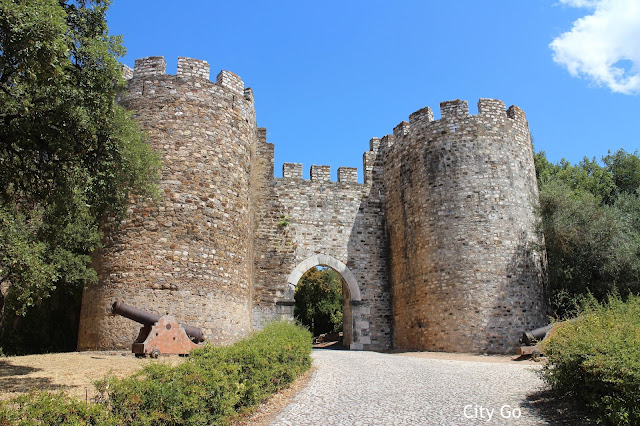
Castle of Vila Viçosa, Portugal

Image
The castle of Vila Viçosa was built in the 13th century by order of King D. Dinis. However, little remains of the original structure as it was rebuilt and remodelled several times through the centuries. It was donated to the Constable of Portugal, D. Nuno Álvares Pereira after he won the Battle of Aljubarrota (1385), which was determinant for Portugal's independence from Castile. D. Nuno and  the King of Portugal, D. João I established t he Dukedom of Bragança by giving  substantial dowries of land to their (to be married) daughter and son, including the castle of Vila Viçosa. The House of Bragança became one of the richest and most powerful Houses in the kingdom. However, the third Duke of Bragança was executed by King D. João II, who sought to weaken the power of the House of Bragança. Without any legitimate heirs, the King was succeeded by the Duke's brother, King D. Manuel I, who reinstated the Dukedom.  On his return from exile, the fourth Duke of Bra...

Museum of Christian Art, Heraklion, Greece

Image
The museum of Christian Art is located close to St. Minas Cathedral.It is housed in the church of Saint Catherine, which was formerly part of the Monastery of the Sinaites. The Monastery was founded in the 10th century but the church was only built much later, in the 16th century, displaying influences from Venetian architecture. During Turkish rule the church was converted into a mosque, remaining as such until 1922, when the last Muslims left Heraklion. The main theme of the exhibition is religious art developed in Crete between the 14th and 19th centuries, including items by two important representatives of the Cretan School of Icon Painting, Angelos Akotantos and Michael Damaskinos. After the fall of Constantinople (Istanbul) in 1453, with many artists fleeing to Venetian-ruled Crete, the contact with Venice introduced aspects of Renaissance Italian art to Crete. The mix of Byzantine tradition with Italian influences resulted in an entirely new style known as the Cretan School...

Catherijne Convent Museum, Utrecht, Netherlands

Image
Saint Catherine's Convent Museum houses a vast collection of religious art, ranging from the medieval period to the 21st century. It was created in 1979 and includes richly illuminated manuscripts, jewelled book bindings, Dutch paintings from the Golden Age, altarpieces, ecclesiastical vestments and artefacts in gold and silver. It also includes a "Pandhof", a courtyard with a garden where some of the plants have biblical references. The convent was built in the 16th century by the Order of the Knights of Saint John and it included a hospital wing with 24 beds, at the time the largest in Utrecht. After the Reformation, the convent was abandoned and laid in ruins until a large-scale renovation carried out in the 1950s. Opening hours: Tue. to Fri. 10 a.m. to 5 p.m.; Sat. and Sun. 11 a.m. to 5 p.m.; Entrance fee: €12.50 (plus €3 for temporary exhibitions) Back to Utrecht

Saint Catherine's Cathedral, Utrecht, Netherlands

Image
Saint Catherine's Cathedral in Utrecht was founded in 1468 as part of a Carmelite Friary. It was later completed by the Order of the Knights of Saint John. After the Reformation, it was the home of a Protestant Community between 1580 and 1815. However, in 1840 it was returned to the Catholic Community and since 1853 it has been the seat of the Roman Catholic Church in Utrecht. Some relics of Saint Willibord, the patron saint of the Benelux countries, are kept here, under the main altar. Opening hours: Tue., Wed., Fri. and Sat., from 12 pm to 4 pm. Entrance free Back to Utrecht

La tour Sainte-Catherine, Brussels, Belgium

Image
This bell tower belongs to the 14th-century church dedicated to Saint Catherine, replaced in the 19th century by the current church, standing just beside it. The bell tower was built in the baroque style in the 16th century, when the old church was renovated, losing its gothic features. However, by the 19th century, the old church was too small and constantly flooded, having to be closed down and demolished. How to go: Sainte-Catherine metro station

Museé de Cluny, Paris, France

Image
The Museé National du Moyen Age is located in Hotel Cluny, an outstanding example of civic architecture in medieval Paris. It started being built in 1334 and was later rebuilt between 1485-1510, combining gothic and renaissance elements. In 1832 Alexandre du Sommerard bought the building and installed there his large collection of medieval and renaissance artefacts; upon his death, the collection was bought by the State and the building was opened as a museum in 1843. The Hotel was built on the remnants of the 3rd century Roman Baths which can also be visited. Opening hours: 9.45 to 17.45 (closed on Tuesdays) Entrance fee: €9 How to go: Cluny-La Sorbonne metro station.

Jardim do Coreto, Tavira, Portugal

Image
The Coreto garden is the oldest public garden in Tavira. It was created in 1890 and the bandstand (coreto), built in iron, was ordered from Oporto .

Loule's Castle, Portugal

Image
In the 2nd century AD, the Romans transformed the remnants of an old "castro" into a military fortification. Five centuries later the site was conquered by the Moors who built the original castle. Some of the Almohad walls built or reinforced in the 12th century are still visible, scattered around the city. After being definitely reconquered by D. Paio Peres Correia in 1249 the castle was rebuilt and it is segments of this period that are still visible today. The castle was badly damaged by the Great Earthquake of 1755 and whatever was left was incorporated in the buildings constructed after the earthquake. In recent years significant efforts have been made to recover the monument. Opening hours : Tue. to Fri. 10 a.m. to 5.30 p.m. (6 p.m. Jun. to Sep.); Sat. 10 a.m. to 4 p.m. (4.30 p.m. Jun. to Sep.); Entrance fee : €1.62 (inc. archaeological museum)