Posts

Showing posts with the label Vila Viçosa

Church of São João Evangelista, Vila Viçosa, Portugal

Image
The church of São João Evangelista (Saint John the Evangelist), also known as the church of São Bartolomeu (Saint Bartholomew), was built in the 17th century in the Baroque style, by order of the Dukes of Braganza- later the monarchs of Portugal- as the church of the Jesuit college. The church was never concluded as the Jesuits were expelled from Portugal in 1759. The facade of the church is covered in marble from the region.

Castle of Vila Viçosa, Portugal

Image
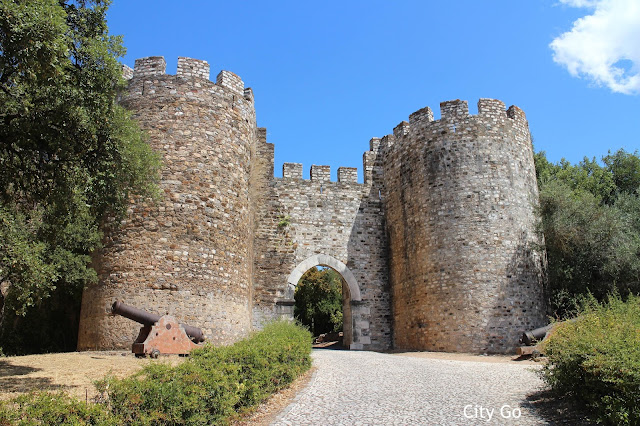
The castle of Vila Viçosa was built in the 13th century by order of King D. Dinis. However, little remains of the original structure as it was rebuilt and remodelled several times through the centuries. It was donated to the Constable of Portugal, D. Nuno Álvares Pereira after he won the Battle of Aljubarrota (1385), which was determinant for Portugal's independence from Castile. D. Nuno and  the King of Portugal, D. João I established t he Dukedom of Bragança by giving  substantial dowries of land to their (to be married) daughter and son, including the castle of Vila Viçosa. The House of Bragança became one of the richest and most powerful Houses in the kingdom. However, the third Duke of Bragança was executed by King D. João II, who sought to weaken the power of the House of Bragança. Without any legitimate heirs, the King was succeeded by the Duke's brother, King D. Manuel I, who reinstated the Dukedom.  On his return from exile, the fourth Duke of Bra...

Hunting Museum, Vila Viçosa, Portugal

Image
If you are easily impressed by embalmed animals this museum is not for you. The first time I saw a museum like this was in Bordeaux and it quite impressed me. Besides the embalmed animals the collection also includes African indigenous weapons and other artefacts and ceremonial weapons gifted to Prince Luis Filipe when he visited Angola and Mozambique in 1907. Opening hours:  Tue. 14h-17h (18h Jun. Sep.); Wed.-Sun. 10h to 13h and 14h to 17h  (18h Jun. Sep.) Entrance fee:  €3 (includes archaeological museum and castle)

The Archaeological Museum, Vila Viçosa, Portugal

Image
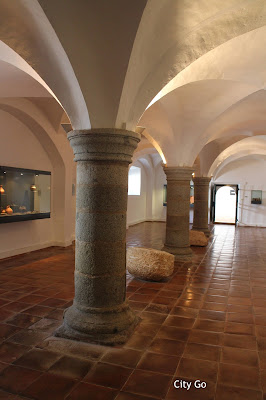
The archaeological museum was inaugurated in 1999 to house the findings from excavations in the region, mainly from the Roman Period. The collection also includes materials resulting from the restoration of local patrimony. Opening hours: Tue. 14h-17h (18h Jun. Sep.); Wed.-Sun. 10h to 13h and 14h to 17h  (18h Jun. Sep.) Entrance fee: €3 (includes castle and hunting museum)

Church of Santa Maria do Castelo, Vila Viçosa, Portugal

Image
The church of Santa Maria do Castelo stands within the castle walls and was built between 1569 and 1606, by order of King D. Sebastião, to replace the old medieval church. Decades later, in 1640, the church became an important national symbol when King D. João IV consecrated the crown of the Virgin Mary, proclaiming her the Queen and Patroness of Portugal, after which the Portuguese monarchs never wore the crown again. The church was badly damaged by the earthquake of 1755, which killed 29 people inside the church. The restoration works were slow and only ended in the 19th century. King D. José with the crown beside him and not on his head (Wikipedia)

Ducal Palace of Vila Viçosa, Portugal

Image
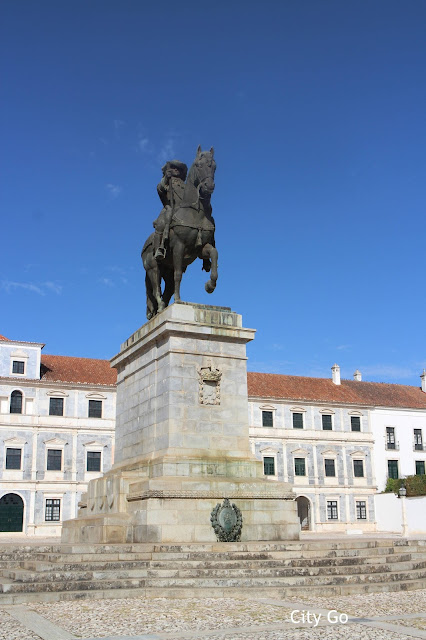
The Ducal Palace of Vila Viçosa was built in the early 16th century, by the fourth Duke of Bragança, D. Jaime. The Dukes of Bragança, originally from this city (Bragança) in Northern Portugal, relocated to Vila Viçosa in the 15th century. They moved to the castle on the hilltop but by the early 16th century D. Jaime, the 4th Duke of Bragança, decided he had had enough with the discomfort of living in a medieval castle and decided to have a Palace built. However, the works that gave the Palace its grandeur and mannerist style that can be seen today, were only carried out in the 16th and 17th centuries. The Palace raised in importance when, in 1640 the 8th Duke of Bragança became the King of Portugal, D, João IV. Much of the finest furniture was taken to Lisbon at this time- and later to Brazil, when the royal family fled the French Invasions- but there are still many pieces of interest to be seen. The Palace continued to be a place of relaxation and leisure, particularly for the ki...