Posts

Showing posts with the label City Museums

The Aljibe of Caceres, Spain

Image
The Aljibe is part of the Museum of Caceres and is one of the most important remnants of Islamic times. It is a water cistern belonging to the 10th century Muslim Alcazaba on top of which the Palaces that house the Museum were built (Palacio de las Veletas and Casa de los Caballos). It was partially excavated on the rock and some of its columns date back to the Roman period. It is possible that it was initially used as a Mosque but from the 12th century on it was definitely used as a water reservoir. Back to the Caceres Museum

Caceres Museum, Spain

Image
The Caceres Museum is housed in Casa de las Veletas and Casa de Los Caballos, two of the buildings classified as Human Heritage by UNESCO and erected in the 15th and 16th centuries, respectively. The Casa de las Veletas houses the archaeological and ethnographic collections, which were opened to the public in 1933. The archaeological collection spans from the Lower Paleolithic to the beginning of the Middle Ages. The Fine Arts collection was inaugurated in 1992 and is housed in the Casa de los Caballos. Opening hours: 9 am to 3 pm// 4 pm to 7.30 pm (5 pm to 8.30 pm mid-April to Sep., 10 am to 3 pm on Sundays) Entrance fee: €1.20 The Aljibe Back to Caceres

Museé de la Ville de Bruxelles, Belgium

Image
The City Museum is located in the most emblematic square of Brussels, the Grand Place. It is housed in the Maison du Roi (king's house), a neo-gothic building that used to be the home of the Dukes of Brabant; in the 16th century, this was Charles V, also the king of Spain. The building is also known as Broodhuis (Bread house) because it is located on the site of an ancient bread market. The museum is dedicated to the history and folklore of the city of Brussels, including a small exhibition on the iconic Manneken Pis. It features paintings, tapestries, sculptures, photos and models that illustrate the story of Brussels from the early days to today. The museum was inaugurated in 1887, after the recovering of the building.  Opening hours: 10 am to 5 pm, closed on Mondays, Jan 1, May 1, Nov 1, Nov 11 and Dec 25. Entrance fee: €8 How to go: Metro Central Station.  

Amsterdam Museum, Netherlands

Image
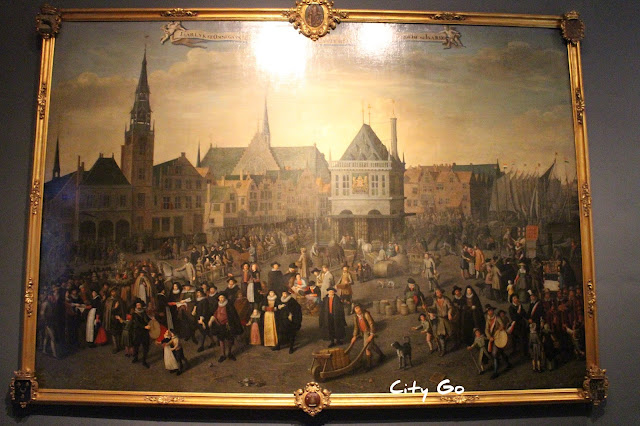
Amsterdam Museum is located in the Middle Age's Saint Lucien's Monastery, which was later used as the city's orphanage. The permanent exhibition Amsterdam DNA offers an overview of the history of Amsterdam with interactive images, sounds, movement and specially selected objects. Opening hours : 10 a.m. to 5 p.m. Entrance fee : €12.50 Copper Monday, when lepers were allowed into town. The oldest map of Amsterdam, painted by Cornelius Anthonisz in 1538. The miracle casket: this casket is traditionally thought to have contained the miracle wafer. Before being a trade city, Amsterdam was a pilgrimage city due to the miracle wafer: a very sick man was given his last rites but he threw up and his vomit was thrown into the fire. However, the wafer remained unscathed. The wafer was twice brought to Oude Kerk and twice it reappeared in the house from which it was brought. A chapel was built on the site but it was twice engulfed by flames in a town fire. The w...