Posts

Showing posts with the label Larnaca

Larnaca archaeological museum, Cyprus

Image
The Larnaca archaeological museum was inaugurated in 1969 and consists of four galleries, following a chronological path from the Neolithic to Roman times. It houses findings from the nearby archaeological site of Ancient Kition. Opening hours : Mon.-Fri. 8 am to 4 pm; Sat. 9 am to 4 pm. Entrance fee : €2.50

Ancient Kition, Larnaca, Cyprus

Image
Kition was a city-kingdom located in present-day Larnaca, established in the 13th century BC. The first inhabitants of Kition were the Achaeans, the first Greek colonists to go to Cyprus. They settled with the purpose of exploiting copper but the settlement eventually faded two centuries later. The town was later rebuilt on a larger scale and there is some evidence of Phoenician presence at the beginning of the 10th century BC. The kingdom was under Egyptian domination for a short period in the 6th century BC and Persia ruled Cyprus from 545 BC. In 499 BC Cypriot kingdoms joined Ionia's revolt against Persia, whose rule over Cyprus eventually ended in 332 BC. However, in 312 BC Ptolomy I from Egypt conquered Cyprus, which was later annexed by Rome in 58 BC. Strong earthquakes in the 4th century destroyed Kition making the population move closer to the sea. Opening hours : mid-Sep. to mid-Apr., Mon. to Fri. 8.30 am to 5 pm; mid- Apr. to mid-Sep., Mon. to Fri. 9.30...

Larnaca, Cyprus

Image
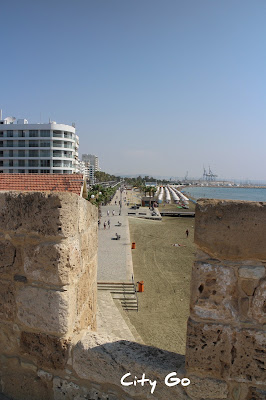
Larnaca is the third largest city in Cyprus, after Nicosia and Limassol. The name of the city might come from the many sarcophaguses (larnakes) found in the area. The city-kingdom of Kiteon, the predecessor of Larnaca, was founded around the 13th century BC with the first Greek colonists arriving between 1200 and 1000 BC. The city was rebuilt by the Phoenicians around 1000 BC, becoming an important centre of Phoenician culture. It was later dominated by other powers but the earthquakes of 322 and 342 AD completely destroyed the city forcing the population to move to the seafront. It eventually became an important commercial port starting in the Middle Ages through Ottoman occupation. The main points of interest in Larnaka are Saint Lazarus church, the medieval fort , the Hala Sultan Tekke, the Archaeological Museum , the Pierides Museum , the Ancient Kition site and Finikoudes Avenue (pictured below).

Pierides Museum, Larnaca, Cyprus

Image
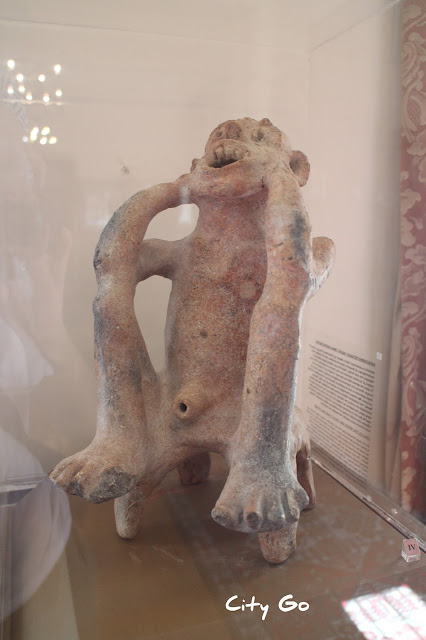
This museum presents about 2500 antiquities from pre-history, through the Byzantine and Roman empires, to the Middle Ages. It was founded in the 19th century by Demetrios Pierides and is the oldest private museum in Cyprus.  At the time it aimed to preserve Cypriot antiquities from being sent off the island by archaeological looters. The collection is housed in a colonial-style mansion dating from 1815. It has some interesting historical artefacts such as the 7000 years old "screaming man", ceramics from Attica, terracotta figurines, Byzantine and medieval ceramics. Opening hours : Mon.-Thu. 9 a.m. to 4 p.m. (1 p.m. Fri.-Sat.) Closed on Sundays. Entrance fee : €3

Larnaca medieval castle, Cyprus

Image
The castle of Larnaca was originally built to defend the southern coast of Cyprus as well as the port of Larnaca. It was later used as an arsenal, a prison and is currently a museum. It was during the Byzantine occupation, in the 12th century, that a small fortress was built close to the port. With the occupation of Famagusta by the Genovese, the city gained influence becoming one of the most important ports in Cyprus so, by the end of the 14th century, the fortress had to be enlarged, corresponding roughly to the building we see today. Opening hours : Mon. to Fri. 8 a.m. to 5 p.m.(7.30 p.m. 16th Apr. to 15th Sep.); Sat. to Sun. 9.30a.m. to 5 p.m. Ticket (standard): €2.50