Posts

Showing posts with the label Evora

Evora Museum, Portugal
Image
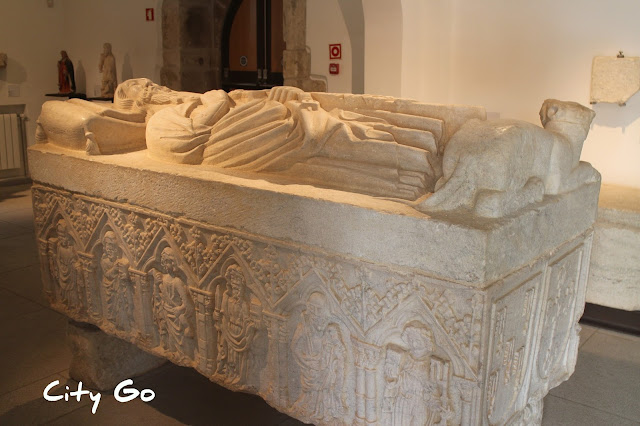
Évora Museum was inaugurated in 1804, by Friar Manuel Cenáculo, Archbishop of Évora, as a public library which also comprised part of his art, archaeological and natural collections. The Évora   Museum  collections currently contain around twenty thousand pieces, with the collections of Painting, Sculpture and Archaeology being outstanding .  One of the highlights of the Museum is the Flemish retable (pictured below). This retable was brought to Evora's Cathedral during major restoration carried out in late 15th century. The retable combines scenes from Christ's Passion with scenes depicting the life of the Virgin. The series has been attributed to Gerard Davis, a painter established in Bruges from 1484. This museum is quite surprising for the quantity and quality of artefacts displayed in a small city, so be sure to visit when in Evora. Opening hours : Tuesday to Sunday, 9.30 a.m. to 5.30 p.m. Entrance fee (standard): €3 How to go:  You c...

Saint Francis Church and Chapel of the Bones, Evora, Portugal

Image
Saint Francis Church in Évora is best known for the gloomy Chapel of the Bones, one of the most famous monuments in Évora. The church was built in a Gothic style, with some Manueline influences, in the late 15th, early 16th centuries, replacing an earlier romanesque church. The main altar, from a later date, displays renaissance features. The day I visited the church was undergoing major restoration works. The gloomy Chapel of the Bones, located next to the main entrance of the church gets its name from its interior walls being covered and decorated with human bones and skulls. It was built in the 16th century by a Franciscan monk who wanted to pass the message of life being transitory or, as the entrance warning goes, "We bones, that are here, for yours await". Opening hours: 09:00 – 12:45 // 14:30 – 17:10 Sundays at 10:00 Entrance fee (standard): €2

Cathedral of Evora, Portugal

Image
Evora's cathedral is the largest medieval building in Portugal. It started being built right after the reconquest of the city from the Arabs, on the site of the city's main mosque, between 1184 and 1204. This initial church, built in the Romanesque style, was a very modest building and during the 13th century it was enlarged, this time in the early gothic style. In the following centuries, it received other valuable additions, the most important the Manueline chapel in the early 16th century (Capela do Esporão) and the Baroque chapel in the 18th century, using marble from nearby Estremoz (Capela Mor). Opening hours : 9-12//14-17 Tickets (standard) : Cathedral €1.50; Cloister and roof €2.50.

Roman Temple, Evora, Portugal

Image
The Roman temple in Evora, which is wrongly referred to as "Temple of Diana", was actually dedicated to the imperial cult of Augustus, worshipped as a god during and after his reign. The temple was built in the 1st century AD and destroyed four centuries later, during the Barbarian invasions. Its columns were used in a medieval tower and the remaining ruins were used as an abattoir, from the 14th century until 1836, which actually helped preserve the temple from further destruction. The temple was eventually reconstructed in 1871 when the additional medieval tower was removed. Back to Evora

Evora, Portugal

Image
Évora is the capital of the Alentejo Region, in Portugal. The name Évora comes from the Celtic word ebora/ ebura, the plural of yew. Evora region was already populated in Neolithic times, with monuments such as the Zambujeira dolmen, the Almendro menhir and the Almendres Cromlech as evidence. However, diggings in Évora show no evidence of the city being inhabited prior to the Roman period. According to legend, Évora was the base from which the Lusitanian and General Sertorius troops attacked Roman power. In 57 B.C. the city was eventually conquered by the Romans and designated Ebora Liberitas Julia has a homage to Julius Ceaser. The city grew in importance due to being at the junction of several important routes. Pliny the Elder, who visited the city, referred to it as "Ebora cerealis" because of the many surrounding wheat fields.In the 3rd century, due to instability, the first walls were built. After the barbarian invasions, the city went into decline and ver...