Posts

Showing posts with the label Arches

Arc de Triomphe, Paris, France

Image
The Arc de Triomphe is located in Place Charles de Gaulle, at the top of Champs Elysées. It was commissioned in 1806 by Emperor Napoleon to honour those who fought and died in the Revolutionary and Napoleonic Wars. It was completed in 1836 and, in 1840, the remains of Napolean passed under the arch on their way to the Emperor's final resting place. The arch was inspired by the arch of Titus, in Rome, and has a total height of 50m. Under the arch there is the Tomb of the Unknown Soldier from World War I. It was the first eternal flame lit in Europe since the Vestal Virgins' fire was extinguished in the 4th century. Opening Hours: 10 am to 11 pm (10.30 in winter) Entrance fee: €12 How to go:  Charles de Gaulle-Étoile metro station. Site:   http://www.paris-arc-de-triomphe.fr/en/

Arco de la Estrella, Cáceres, Spain

Image
The Arco de la Estrella is the main gate to the walled city of Caceres. It was built in the 15th century to allow for the passage of carriages coming from the Plaza Mayor, as the walls had lost its defensive purpose. At the time it was called the Puerta Nueva, the New Gate. However, the current design dates from 1726, when the gate was remodelled. It is named Arco de la Estrella after the statuette of Our Lady of La Estrella. Back to Caceres

Trajan's Arch, Merida, Spain

Image
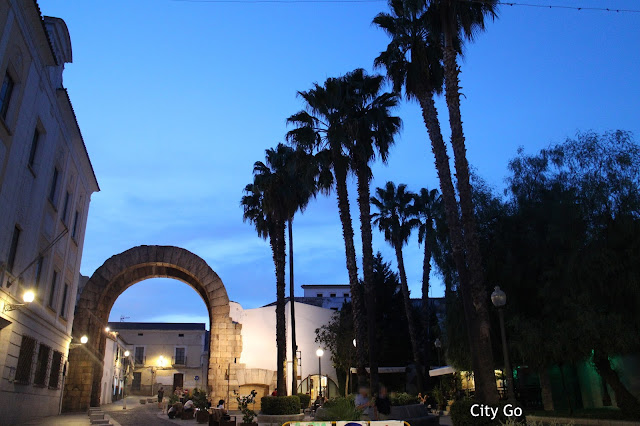
The Arch of Trajan is not a triumphal arch nor is this its original name. It was a monumental gate to the Provincial Forum (main square) located on the main street (cardo), of which little more is known. It's nearly 15m high and 13m wide. Originally it was faced with marble and adorned with statues. For centuries it was a symbol of Merida while its other Roman monuments stood in ruins or buried under the ground. It was possibly erected right after the foundation of the city, in the early 1st century AD. Back to Merida

Arco da Porta Nova, Braga, Portugal

Image
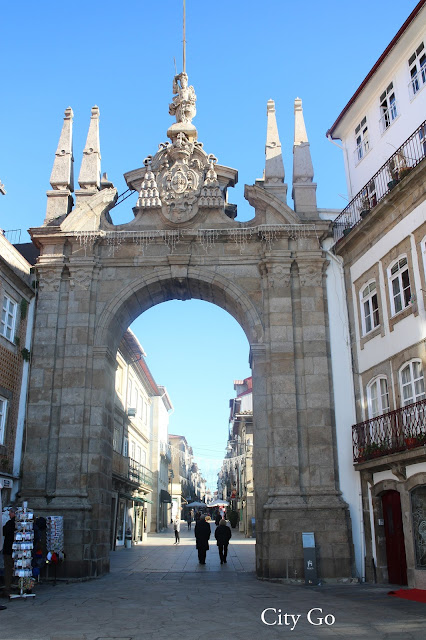
The arch was built in 1512 by order of Archbishop D. Diogo de Sousa. Since no wars had occurred in years the arch had no doors to be closed at night, unlike other city gates. It was also the first city gate that didn't lead to a road; it led to a square and a fountain. The arch was renovated in 1722 giving it the appearance that can be seen today. The facade turned to the city displays the image of Our Lady of Nazaré. There's a Portuguese expression related to this arch: since it was the first gate to not have a door, people who don't close the door behind them are said to be from Braga. Back to Braga

Rua Augusta Arch, Lisbon, Portugal

Image
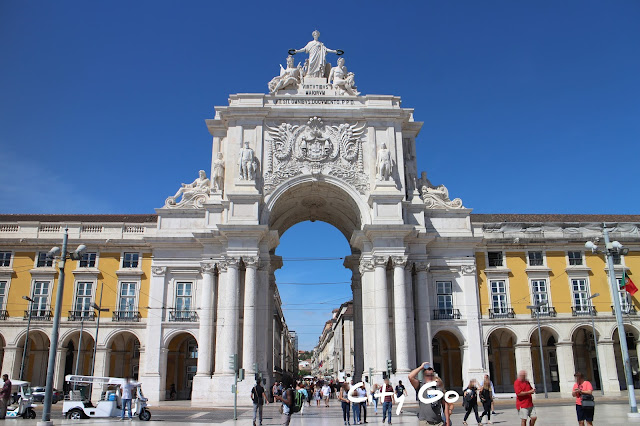
The Rua Augusta Arch offers visitors a unique panoramic view of the city. Inside the arch visitors can learn about its history. It was built between 1759 and 1873, to commemorate the city's reconstruction after the Great Earthquake of 1755. At the top of the arch, there's a statue of Glory crowning Valor and Genius. Right below, on top of the columns, are the statues of four Portuguese historical figures: Nuno Álvares Pereira, Constable of Portugal in the 14th century, Viriatus, chief of the Lusitanian people in the 2nd century BC, Vasco da Gama, navigator that discovered the sea route to India and the Marquis of Pombal, Prime Minister of Portugal at the time of the Great Earthquake. The two remaining figures are rivers Tagus and Douro. Opening hours : 9 a.m. to 7 p.m. Entrance fee : €2.50 Back to Lisbon