Posts

Showing posts with the label Monasteries and Convents

Monastery of the Hieronymites, Lisbon, Portugal

Image
The Monastery of the Hieronymites started being built in 1501 by order of King D. Manuel I. One of the reasons was to have a final resting place for the members of the dynasty he started, the Avis-Beja dynasty. The monastery was built in the characteristic Manueline style, a late Gothic style decorated with elements allusive to the Age of Discoveries- ropes, shells, caravels-, but also includes some Renaissance features. The Monastery resisted well to the earthquake of 1755 but was damaged by the French Invasions of Portugal in the beginning of the 19th century. In 1834 religious orders were extinct in Portugal and the monks of Saint Jerome, to whom king D. Manuel I had given the monastery, were forced to leave. It was at this time that most of its content was lost. The building was then passed on to Santa Casa da Misericórdia, a charity that cared for the orphans and the poor. Renovation works started in 1860 and were finished in time to celebrate the 4th centennial...
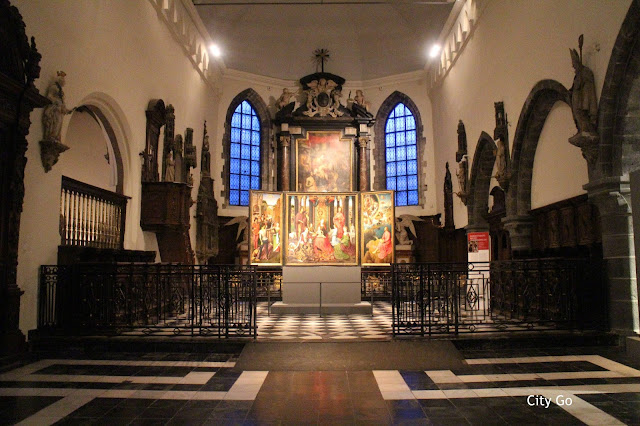
Sint Janshospital, Bruges, Belgium

Image
Saint John's Hospital in Bruges is one of the oldest preserved hospital buildings in the world. It was built in the 12th century and was active until 1978. It grew during the Middle Ages and it was the place were the sick, pilgrims and travellers were cared for by nuns and monks. The museum displays several medical instruments and furniture but it's better known for six masterpieces of the 16th-century artist Hans Memling, including a shrine of Saint Ursula painted specifically for Saint John's. Unfortunately, the medical display can sometimes be cleared to give way to temporary exhibitions of modern art, which was the case the day I visited. Opening hours: 9.30 am to 5 pm Entrance fee: €8 Back to Bruges

Parador of Merida, Spain

Image
The Parador of Merida was inaugurated in 1933, one of the oldest in Spain. It was originally an 18th-century Convent, built on top of a Roman temple dedicated to Augustan Concorde. The temple was later remodelled by the Visigoths and converted into a mosque during Islamic rule. It displays Roman, Visigothic and Mudejar remains used to build a Franciscan Monastery in the 15th century. This latter building was remodelled in the 18th century. After the extinction of religious orders in Spain, the building was used as a home for the poor, a hospital and an asylum. It was finally converted into a Parador. Back to Merida

Monastery Vidiani, Lassithi, Greece

Image
The Vidiani Monastery is located at the foot of Mount Loulodaki, in Lassithi Plateau. It was founded in the mid-19th century by monk Methodius on the ruins of a former monastery. The monastery was set to fire during the revolution of 1866 but was soon rebuilt. There you can find a small cafe and buy traditional natural products like oils and soap. It's the ideal place to make a small stop while exploring the Lassithi Plateau. How to go: The monastery is included in some bus excursions to Lassithi Plateau. Otherwise, you can reach the monastery by car, as public transport to Lassithi Plateau is scarce.

The Monastery of Saint Peter and Saint Paul, Heraklion, Greece

Image
Close to the Historical Museum of Crete, this monastery dates from the early period of the Venetian domination of Crete, as it was built by the Cistercian monks in the 12th century and was later occupied by the Dominican Order. It was badly damaged by an earthquake in 1508 and partly destroyed during the Ottoman period when it was converted into a mosque. Recent diggings have revealed graves of the second Byzantine period and an extended dwelling from the Arabic period. All findings are exhibited at the Historical Museum. The complex is being recovered. Entrance free Opening hours: 8.30 am to 3 pm Heraklion