Posts

Showing posts with the label Greece

Heraklion, Greece

Image
Heraklion is the capital of the island of Crete and is at the heart of the region where the Minoan civilization once flourished. South of Heraklion stands the Palace of Knossos and the city might have served as a harbour for the Palace. Knossos was badly damaged by an earthquake around 1600 BC but was inhabited until 1100 BC, when it was converted into a sacred place. The town of Knossos continued to exist until the Arab raids. As Knossos faded Heraklion became a more important town. As a harbour, it kept in contact with other Greek cities during the Classical Period, sometimes even forming short-lived alliances. It was integrated into the Roman Empire in 67 BC enjoying the prosperity brought by the Pax Romana. At this time the city was known as Heracleum, the port of Heracles.  As the Roman Empire was split into two, Crete became part of the Byzantine Empire. Starting in the 7th century AD there were several raids from pirates, mainly Arab, which at one point settled ...

Chania Old Town, Greece

Image
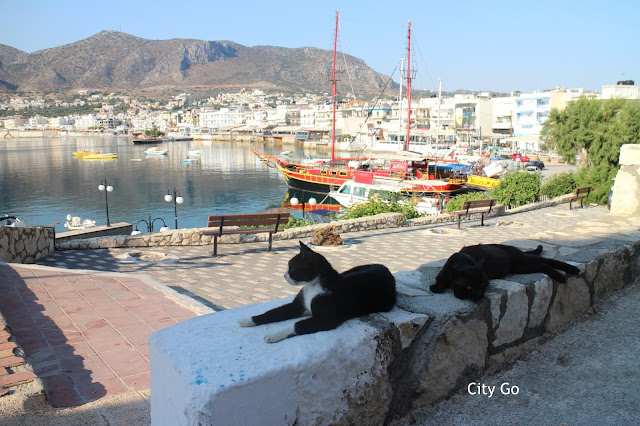
The old town of Chania is a maze of colourful streets with cafes, tavernas, shops and...cats. The architecture of the buildings reflects the culture and religion of the different foreign powers that ruled the island for centuries: the Venetians, the Ottomans and, for a short period between 1831 and 1841, the Egyptians. The main points of reference in Old Chania are: - The Kastelli quarter, located on the hill above the harbour, where Chania originated, between 3650 BC and 3000 BC; - The Topanas quarter behind Firkas Fortress, inhabited by Christians during Ottoman rule. It's named after the Venetian armoury, the designation being "tophane" in Turkish; - The Jewish quarter, located east of Topanas, created by the local Jews right after Chania was conquered by the Ottomans, in 1645; - The fountain square, a reminder of the original Venetian fountain; - Chalidon street, where some of the most important monuments are located, like the Orthodox cathedral, the Catho...

Rethymnon Old Town, Greece

Image
The Old town of Rethymnon combines the Oriental features of the Turkish Period with the Renaissance-style Venetian architecture. In 1571, during the Turkish siege- after which the Fortezza was built- most buildings of Gothic features were destroyed and most of the city had to be rebuilt in the fourth quarter of the 16th century. Building styles then changed during the Turkish occupation, when the dressed stone of the Venetians was replaced by the wooden frames of the Turkish. How to go: By bus from Heraklion ( KTEL ). What to see: Fortezza Harbour Lake Kournas Rimondi Fountain

Agios Nikolaos, Greece

Image
Agios Nikolaos dates back to the Bronze Age, when occupants of Dorian Lato, a settlement on the hills, decided for the strategic importance of having a harbour. The new settlement was known as Latos Pro Kamara, or simply Kamara, and outlasted the one on the hills well into the Roman period. In the 13th century, the Genoese pirate Enrico Pescatore built a fortress named Mirabello, for the wonderful views of the bay it offered. He didn't enjoy his new fortress much as it was soon conquered by the Venetians. It was twice destroyed, in 1303 by an earthquake and in 1537 by pirates but was always rebuilt. It was finally destroyed by the Ottomans when they conquered the island and during this period Agios Nikolaos was abandoned. It was only after the 1866 Rising that people started to come back to Agios Nikolaos and named it after a small church on the hills. How to go: from Heraklion you can take the KTEL bus; it takes about one hour. The bus station in Agios Nikolaos is off t...

Lassithi Plateau, Greece

Image
The Lassithi Plateau lies at an average altitude of 840m and is famous for its white-sailed windmills, used to irrigate the land. Unfortunately, in recent years many of these windmills have been being abandoned, replaced by more modern irrigation methods. Exiting Lassithi Plateau towards Heraklion there's an area with stone flour mills dating back to the 1800s, which operated until the end of World War II. The Plateau has been continuously inhabited since the Neolithic, except for about two centuries starting in 1293, during the Venetian rule, when due to constant revolts the natives were forced to leave. In the plateau, there are many caves of archaeological interest like the Dikteon Cave where it is said Zeus was born. More on Lassithi: Dikteon Cave Monastery Vidiani   W indmills of Lassithi Plateau How to go: Public transport to Lassithi is scarce, so the most convenient way to go is by car or on an organised excursion.

Hersonissos, Greece

Image
Hersonissos or Chersonissos, officially known as Limenos Hersonissou (Port of Hersonissos) is a village 26km east of Heraklion and one of the main tourist resorts in Crete. Hersonissos dates back to Minoan times and following the destruction of the Minoan civilisation it continued to be inhabited. In Roman and early Byzantine times, Hersonissos was a major sea port. Remains from this period can be found in Kastri Hill, above the harbour. Other remains are still being dug. Later the city was continuously raided by pirates and the inhabitants had to move inland, to Ano Hersonissos (upper Hersonissos) and Hersonissos seaside fell into obscurity. By the 1900 census, there were only 133 inhabitants. It was only in the 1960s, after being discovered by tourism, that Limenos Hersonissou once again prospered. How to get there: There are KTEL buses from Heraklion and the airport, taking about 30 to 45 minutes ( official site , with more timetables). Points of interest: Agia Parask...

Agios Titos Church, Heraklion, Greece

Image
The church of Saint Titus was originally built in the 10th century. It housed all the saint's relics which had been moved from Gortyn after it was destroyed by an earthquake. With the fall of Heraklion to the Ottoman Empire, all relics were moved to Venice and the church was converted into a mosque, known as the Vezir Mosque. The skull of Saint Titus was returned to Crete in 1966. The great earthquake of 1865 completely destroyed the building which was reconstructed as an Ottoman Mosque. By the 1920s, when the last Turks left, the mosque was, in turn, converted into an Orthodox church and the minaret was destroyed. Saint Titus was a disciple of the Apostle Paul and the first bishop of Crete. Entrance free

Keras Kardiotissas Monastery, Greece

Image
The Keras Kardiotissis Monastery is an Eastern Orthodox Monastery dedicated to the Virgin Mary, first mentioned in manuscripts in 1333. Its interest derives from the amazing 14th-century frescoes in the small church. It is built on the northern slopes of Mount Dikti, at an altitude of 650 meters. The monastery became renowned for its miracle-working Panagia Kardiotissa icon, which is said to have been stolen three times, and on the three times returned "on its own" to the monastery. On the third time, it was even tied to a column with chains, both of which can be seen in the monastery. It was successfully stolen a fourth time by a wine merchant and taken to Rome, where it's now enshrined in the church of St. Alphonsus. The icon was replaced by a copy dating from 1735 which is also regarded as miraculous. Opening hours: Closed on Mondays Entrance fee: €2 How to go: By car or an excursion to the Lassithi Plateau.

The Windmills of Lasithi Plateau, Greece

Image
The first windmills in Lasithi Plateau, Crete, appeared during the Byzantine Period. Their numbers increased significantly during the Venetian Period due to the importance of the Plateau in the production of cereals. The windmills shown below were built after the Cretan Revolution of 1866-1869 and operated until World War II. Most of the windmills in the Plateau are fixed, that is, their axis of rotation is only oriented to the dominant wind direction. Most of the mills have been abandoned and are now ruined. There used to be as many as 10,000 windmills but today the number has reduced significantly as people turn to more modern technologies. How to get there: Public transport to Lasithi Plateau is scarce, so you either rent a car or book an excursion that will stop at the windmills on its way to Zeus Cave.