Posts

Showing posts with the label Mallorca

Mallorca, Spain

Image
Mallorca is one of the Balearic Islands, located in the western Mediterranean, off the east coast of Spain. The toponym comes from the Latin for "larger island" (isola maior). It has been inhabited since 7000 BC. The Phoenicians were the first to colonise the island in the 8th century BC which later became under the rule of Carthage. However, after the Romans won the Second Punic War against Carthage they occupied the island in 123BC, which flourished with the cultivation of vineyards and olive trees and the mining of salt. During this period the towns of Pollentia (Alcudia) and Palmaria ( Palma ) were founded. From the early 8th century the island, which had eventually become under the rule of the Eastern Roman Empire, was attacked by the Muslims, who conquered it in 902. Under the Emirate of Cordoba, the island once again prospered and the town of Palma was reshaped and expanded, becoming known as Medina Mayurqa. The Moors introduced irrigation and developed loca...

Palma de Mallorca, Spain

Image
Palma is the capital city of the Balearic Islands, located on the island of Mallorca. The city was established as a Roman Camp, on top of an abandoned settlement from the Bronze Age. It was one of the two main cities on the island, the other being Pollentia , in the East. It was successively under Byzantine and Muslim rule. The Muslims called it Medina Mayurqa and for the first one and a half century the city "de facto" enjoyed absolute autonomy. However, unable to defend from Viking raids it was incorporated in the Emirate of Córdoba. Palma was conquered by James I of Aragon in 1299 and became the capital of the Kingdom of Mallorca. In the following years, many of the most emblematic monuments were built, such as the Bellver Castle and the La Seu Cathedral . In 1714 the end of the war of succession also brought the end of the Kingdom of Aragon. The government of the city was separated from the government of the rest of the island and it was only in 1833 that Palma ...

Can Pastilla, Mallorca, Spain

Image
Can Pastilla is a relatively recent resort, which developed from a single hotel built in 1918 but only truly developed in the 1960s when it was "discovered" by British tourists. It is the closest resort to the capital city of the island of Mallorca, Palma de Mallorca, to which it is connected by a long promenade. It's both a family-friendly resort and popular with youths, which can make it a bit noisy close to bars and nightclubs. Can Pastilla has one of the largest beaches on the island and a few children friendly attractions, like waterparks. Palma is close enough for a cultural day (or half day) out. How to go: Bus 15 from Palma de Mallorca. Takes about 30 minutes. Back to Mallorca Bus to Can Pastilla

Portocristo, Mallorca, Spain

Image
The small fishing town of Portocristo (Port of Christ) was given this name when, at the time of the Christian re-occupation in 1260 a. D., a boat with a crucifix washed-up on the beach. Today it's a family resort with litle to do but swim, sunbathe and go to one of the many restaurants and cafes by the sea shore. Nearby are the Cuevas del Drach (Dragon Caves), a large cave system with Europe's largest underground lake. How to go: From Palma de Mallorca you can take bus 412 to both Portocristo and Cuevas del Drach. Back to Mallorca Cuevas del Drach (from the site www.cuevasdeldrach.com)

Sierra de Tramuntana, Spain

Image
The Tramuntana mountain, classified in 2011 as World Heritage by UNESCO, ranges from Andratx to Cap Formentor, a distance of about 90km. Its highest peak is Puig Major at 1445 metres. The mountain has several picturesque small villages which are worth a visit for their cultural and historical value.  ( Back to Mallorca ) During my two days on the mountain I was able to visit the following: Valldemossa Valldemossa is a pretty rural town with picturesque streets flanked by shops, galleries, restaurants and cafes. It's dominated by the 14th-century Charterhouse where Chopin and writer George Sand spent the winter of 1838. Cap de Formentor Cap de Formentor is the most northeastern point of the island of Mallorca presenting a dramatic scenery of unusual rock formations emerging from translucid turquoise waters. Sanctuary of Lluc The sanctuary is surrounded by pine trees, in a very peaceful and relaxing surrounding. It was built on the si...

La Granja, Mallorca, Spain

Image
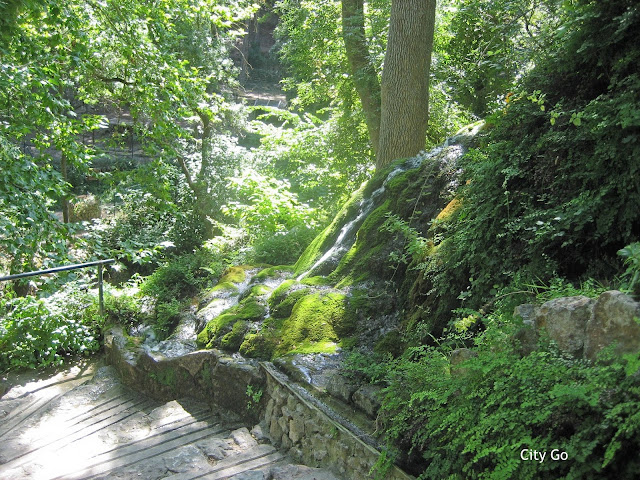
La Granja is mainly an ethnographic museum where it's possible to go back in time and learn about the traditional crafts needed to keep a farm functioning. It also has some historical exhibitions. At the beginning of the visit, there are a few farm animals and the main house is surrounded by gardens, ponds, fountains and waterfalls, with small streams of water and watermills. At the end of the visit, there's a sampling shop where it's possible to taste a selection of traditional products. There's also a cafe and a restaurant that can be accessed without visiting the museum. On Wednesdays and Fridays, it's possible to watch the craftsmen and women live at work and there's a traditional show. The visit will take longer than usual for this type of museum, as there is quite a lot to see, so reserve at least a couple of hours. Opening hours: 10 am to 7 pm (6pm in Winter) Entrance fee: €15 How to go : Take bus 200 from Palma de Mallorca to Esporles Bac...