Posts

Showing posts with the label L

Lassithi Plateau, Greece

Image
The Lassithi Plateau lies at an average altitude of 840m and is famous for its white-sailed windmills, used to irrigate the land. Unfortunately, in recent years many of these windmills have been being abandoned, replaced by more modern irrigation methods. Exiting Lassithi Plateau towards Heraklion there's an area with stone flour mills dating back to the 1800s, which operated until the end of World War II. The Plateau has been continuously inhabited since the Neolithic, except for about two centuries starting in 1293, during the Venetian rule, when due to constant revolts the natives were forced to leave. In the plateau, there are many caves of archaeological interest like the Dikteon Cave where it is said Zeus was born. More on Lassithi: Dikteon Cave Monastery Vidiani   W indmills of Lassithi Plateau How to go: Public transport to Lassithi is scarce, so the most convenient way to go is by car or on an organised excursion.

Lychnostatis Open Air Museum, Hersonissos, Greece

Image
The Lychnostatis Open Air Museum contains a variety of objects and structures related to the history, culture, folklore, ethnology and flora of the island of Crete. The founder of the museum, Yiorgios Markakis, collected objects for 30 years, and then, along with his family and friends, spent about five years building this Cretan village. Opening hours: 9 a.m. to 2 p.m. (Nov.-Mar. require prearrangement) Entrance fee: €5 (€2 for the audio guide) How to go: You can reach the museum by bus (Hersonissos, KTEL )

Square Louise-Michel, Paris, France

Image
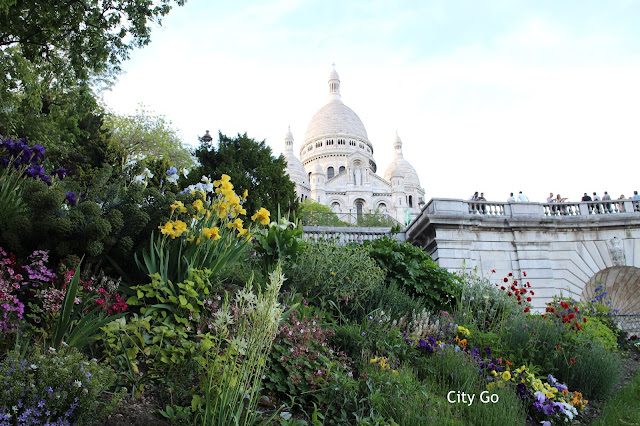
The first square, Saint Pierre square, was created in 1877, but after some landslide problems, a new square started being planned in 1889. The eastern part of the park was concluded in 1894 including waterfalls, rock gardens, grottos, paths and stairways. The whole park was only concluded in 1927 and was inaugurated as Square Willette, after a painter.  The square became known mainly for the 222 steps leading to the church of Sacré Coeur; however, it's a very relaxing place to rest, with its luxuriant vegetation, a variety of tree species and the monumental fountain, by Paul Gasq, dedicated to the sea gods. The square also offers magnificent views over the city of Paris. In 1975 the square was renamed Louise-Michel after a teacher and revolutionary of the Paris Commune. Opening hours:  From 8 a.m. to 17.45 p.m. (Winter)/ 21.30 (Summer) (changes along the year); opens at 9 a.m. on Sat., Sun. and holidays. How to go:  Anvers metro station.

Museé du Louvre, Paris, France

Image
The Louvre dates back to 1190 when King Phillipe Auguste ordered the construction of protective walls and Louvre was the castle in the junction between the walls and the river Seine. It had a square plan, was protected by a moat and circular defensive towers at its corners and in the middle of its sides. In the centre of the courtyard stood a tower with its own moat. At the time the Louvre was located in the outer limits of Paris. The foundations of this period are viewable in the basement level of the Louvre museum. A dense urban district gradually grew around it, taking away its protective purpose. For a few centuries, the French kings mainly resided in the Loire Valley, but that changed in the 16th century when King François I was defeated at the Battle of Pavia (1525) and held captive in Spain. On his return, he wanted to regain control of the capital and declared the Louvre his main residence. The medieval castle was then razed in favour of a...

Lower Barrakka Gardens, Valletta, Malta

Image
The Lower Barrakka Gardens is a public garden in Valletta, twinned with the Upper Barrakka Gardens, and allows for a magnificent view of the entrance of the Grand Harbour and Fort Saint Angelo, in Vittoriosa. The garden is home to a number of trees, constituting a relaxing place and a refuge in the hot summer months. The garden includes a statue of Alexander Ball, erected by public subscription in 1810. Alexander Ball directed the blockade of Valletta, against the French, in 1798-1800 and later became the first British Governor of Malta. The garden also includes the Siege Bell Memorial, in remembrance of the Great Siege of Malta during World War II. Opening hours: 7 am to 10 pm; Entrance free Back to Valletta

Loule's Castle, Portugal

Image
In the 2nd century AD, the Romans transformed the remnants of an old "castro" into a military fortification. Five centuries later the site was conquered by the Moors who built the original castle. Some of the Almohad walls built or reinforced in the 12th century are still visible, scattered around the city. After being definitely reconquered by D. Paio Peres Correia in 1249 the castle was rebuilt and it is segments of this period that are still visible today. The castle was badly damaged by the Great Earthquake of 1755 and whatever was left was incorporated in the buildings constructed after the earthquake. In recent years significant efforts have been made to recover the monument. Opening hours : Tue. to Fri. 10 a.m. to 5.30 p.m. (6 p.m. Jun. to Sep.); Sat. 10 a.m. to 4 p.m. (4.30 p.m. Jun. to Sep.); Entrance fee : €1.62 (inc. archaeological museum)

Larnaca archaeological museum, Cyprus

Image
The Larnaca archaeological museum was inaugurated in 1969 and consists of four galleries, following a chronological path from the Neolithic to Roman times. It houses findings from the nearby archaeological site of Ancient Kition. Opening hours : Mon.-Fri. 8 am to 4 pm; Sat. 9 am to 4 pm. Entrance fee : €2.50

Limassol Archaeological Museum, Cyprus

Image
The archaeological museum in Limassol was founded in 1948 and was initially located in the castle. The modern facilities started being built in 1972 and opened to the public in 1975. The museum presents local findings from the pre-neolithic period to the late roman period. Many artefacts come from Amathous and Kourion sites nearby. Opening hours : Mon.- Fri. 8 a.m. to 4 p.m. (closed on weekends) Entrance fee : € 2.50