Posts

Showing posts with the label H

Pizarro House Museum, Trujillo, Spain

Image
This small museum is dedicated to the "Conquistador" Francisco Pizarro. The lower floor recreates a house of the 15th century; the upper floor has a small exhibition  with very few items on display . The house museum is located in what used to be his family home and where he spent his childhood. Opening hours: 10-14// 17-20 (Oct. to Mar. 16-19) Entrance fee: €1.50

Hunting Museum, Vila Viçosa, Portugal

Image
If you are easily impressed by embalmed animals this museum is not for you. The first time I saw a museum like this was in Bordeaux and it quite impressed me. Besides the embalmed animals the collection also includes African indigenous weapons and other artefacts and ceremonial weapons gifted to Prince Luis Filipe when he visited Angola and Mozambique in 1907. Opening hours:  Tue. 14h-17h (18h Jun. Sep.); Wed.-Sun. 10h to 13h and 14h to 17h  (18h Jun. Sep.) Entrance fee:  €3 (includes archaeological museum and castle)

Hersonissos, Greece

Image
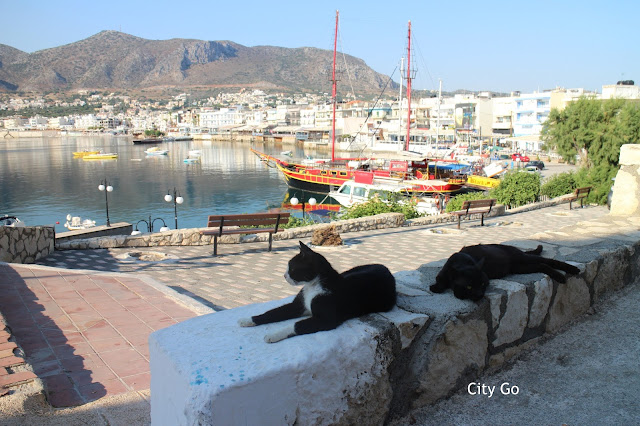
Hersonissos or Chersonissos, officially known as Limenos Hersonissou (Port of Hersonissos) is a village 26km east of Heraklion and one of the main tourist resorts in Crete. Hersonissos dates back to Minoan times and following the destruction of the Minoan civilisation it continued to be inhabited. In Roman and early Byzantine times, Hersonissos was a major sea port. Remains from this period can be found in Kastri Hill, above the harbour. Other remains are still being dug. Later the city was continuously raided by pirates and the inhabitants had to move inland, to Ano Hersonissos (upper Hersonissos) and Hersonissos seaside fell into obscurity. By the 1900 census, there were only 133 inhabitants. It was only in the 1960s, after being discovered by tourism, that Limenos Hersonissou once again prospered. How to get there: There are KTEL buses from Heraklion and the airport, taking about 30 to 45 minutes ( official site , with more timetables). Points of interest: Agia Parask...

Heraklion Market Street, Greece

Image
Not as traditional as expected, the Heraklion Central Market is lined with shops selling souvenirs, clothes, shoes, fruit and vegetables, herbs and spices, along with small cafes and tavernas. Heraklion

Historical Museum of Crete, Heraklion, Greece

Image
The neoclassical building that forms the oldest wing of the museum is a residential mansion built in 1903. Since 1953 it has housed the museum funded and run by the Society of Cretan Historical studies. It was enlarged in the 1970s, with the construction of the new wing. The HMC offers a comprehensive view of Crete's history and art from the early Christian times to the 20th century, including an exhibition on the famous Cretan writer, Nikos Kazantzakis. Opening hours: Mon. to Sat. 9 am to 5 pm (3.30 pm Nov. to Mar.) Entrance fee: €5 How to get there: The HMC is within walking distance of the city centre Heraklion

Heraklion City Hall, Greece

Image
The loggia was an essential building in Venetian cities, it was the meeting place for the ruling class, where topics concerning politics, economic and commercial affairs were discussed. The Loggia seen in Heraklion was originally built in 1628 by orders of General Provisioner Francesco Morosini, who also promoted other important public structures in the city. During the Turkish rule, the building lost administrative importance, becoming the seat of the High Finance officer. As Crete became independent, the building was considered unsafe and people started demolishing the first floor. It was granted to the city in 1905 but restoration only started ten years later, at a very slow pace. After the Second World War restoration works started afresh and were concluded in the 1980s. In 1987 the building was awarded the "Europa Nostra" prize for the most successful restoration of a historical building with a modern use. Heraklion

Hôtel de Ville, Paris, France

Image
The Hôtel de Ville has been the seat of the Paris city council since 1357 when the "mayor" (provost des merchants) of Paris, Etienne Marcel, bought the then called House of Pillars on behalf of the municipality. In 1533 King Francis I found the House of Pillars unsuitable of being the Town Hall of Paris, had it torn down and had a new, tall, spacious building constructed in its place. The works weren't finished until 1628. In 1835 two wings were added to the main building to provide more space to the expanded city government. In 1871, following the defeat of Napoleon III by the Prussian army, the Paris Commune took over the government of the city and chose the Hôtel de Ville as its headquarters. As anti-Commune troops approached the Communards set fire to the Hôtel of which only an empty stone shell was left. The reconstruction of the Hôtel started in 1873 and lasted 19 years, maintaining the 16th-century facade. On the facade are the statues of 338 famous Parisians.  ...

Heraklion Archaeological Museum, Greece

Image
The Archaeological Museum in Heraklion is one of the most important in the world as it houses the remains of the Minoan Civilization, the first in Europe. The building was constructed in the 1930s, on the site of a Venetian Franciscan friary destroyed by an earthquake in 1856, and was closed for renovation between 2006 and 2013. It houses archaeological findings from all over Crete, the pride of the place being the Minoan treasures. It also includes interesting artefacts from other historical periods, covering 5500 years of history. Opening hours: 8 am to 8 pm (between Nov. and Mar. closes at 3 pm and is opened between 11 am and 5 pm on Mondays) Entrance fee: €10 Heraklion

Huis Van Alijn, Ghent, Belgium

Image
The "House of Alijn" is a group of 14th-century almshouses surrounding a courtyard garden, that house the Folklore Museum, with objects depicting the evolution of everyday life during the 20th century. These houses were made as penitence over the murder of 2 children. In medieval times the Alijn and Rym families were rivals and one day two members of the Rym family murdered to Alijn children in Saint Bavo's Cathedral and fled the city. They eventually returned and were pardoned under the condition they would build houses for poor, old women on land donated by the Alijn family. In 1534 a chapel in the late Gothic style started being built. By the 19th century, the houses had lost its initial function and had become dwellings for poor textile workers. In 1941 the very decayed houses were bought by the City of Ghent and were renovated to become the Folklore Museum. Opening hours : 9 a.m. to 5 p.m.; 10 a.m. to 6 p.m. on Sat., Sun. and Holidays. Entrance fee : €6 Ba...